Music in the Garden: Finding Harmony at Creekside Elementary
By Dr. Logan Chopyk (www.spectrumsoundstudio.com)
Creating Inclusive Musical Spaces
At Spectrum Sound Studio, we believe music is for everyone—every ability, every age, every heart. Our mission is to create spaces where people can connect, express, and grow through sound. One of our favorite ways to share that joy is by bringing hands-on musical experiences into the community.
Music in the Garden at Creekside Elementary
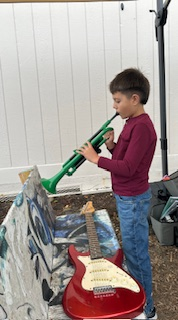
Recently, we had the privilege of hosting a Music in the Garden event at Creekside Elementary School with students in ESN moderate–severe classes. The event was an instrument petting zoo—piano, trombone, trumpet, electric guitar, and a variety of percussion instruments waiting to be explored.
When Instruments Call to Us
What amazed me most was how naturally some students were drawn to specific instruments. One girl connected with the trombone and hardly set it down. Another lit up with both the trumpet and electric guitar. Others found their rhythm with steel drums and glockenspiel, while some preferred to sit quietly and take it all in.
Research suggests this kind of “instrument calling” isn’t random—timbre and personal resonance play a big role in instrument choice, and tools like Gordon’s Instrument Timbre Preference Test have long been used to notice those preferences early.
Connection Beyond Words
There was no single “right” way to experience the moment. Some students used the time to connect deeply with their caretakers—sharing smiles, dancing together, or simply enjoying the sound. A few expressed gratitude in the most heartfelt ways—through hugs, hand-holding, or joyful laughter.
Even when few words were spoken, the garden was alive with communication. Scholars increasingly view music as a powerful early channel for interpersonal communication, giving children multiple pathways to express themselves beyond speech.
Rhythm as Relationship
We also noticed how rhythm brought people together. Moving, tapping, and playing in time often seemed to foster connection. This mirrors research showing that synchronizing with others can support feelings of social bonding, and that shared rhythmic timing enhances coordination and prosocial feelings.
Music as Catharsis and Inclusion
For many, the experience felt like catharsis—a chance to release, to connect, and to be heard in a different way. The broader evidence base for music with autistic and neurodivergent learners is growing: recent syntheses indicate music-based supports can aid communication and social skills, even while high-quality trials remind us to keep refining how and for whom these approaches work best (e.g., a large RCT found no generalized symptom score difference for one therapy format).
What we consistently witness on the ground—engagement, joy, co-regulation—aligns with an inclusive education perspective that values meaningful participation and access for all learners.
A Call for Inclusive Music Education
I left Creekside with a full heart and a renewed conviction that music education belongs to everyone. These children showed what music can do when offered freely and with love: it opens hearts, builds bonds, and reminds us that sound itself can be a form of understanding.
If you’d like to bring an inclusive, sensory-friendly music experience like this to your school or community program, reach out here. Let’s make more spaces where every child can discover their voice through music.
Selected Sources & Further Reading
- Instrument choice & timbre
- Gordon’s Instrument Timbre Preference Test (overview)
- Music as early interpersonal communication (review)
- Rhythmic timing & social bonding
- Music & social bonding mechanisms (review)
- Meta-analysis: music therapy & communication/social skills in ASD
- JAMA RCT on improvisational music therapy (nuanced evidence)
- Inclusive music education (encyclopedia review)